
 By Emma Dylan
Introduction: A New Era of Storytelling
Entertainment has always been driven by one powerful force — storytelling. From the ancient art of theater to the cinematic masterpieces of the 20th century, stories have shaped how humanity connects, feels, and dreams. However, as digital innovation accelerates, a new chapter in storytelling is unfolding. Immersive storytelling, powered by technologies such as virtual reality (VR), augmented reality (AR), mixed reality (MR), and artificial intelligence (AI), is revolutionizing how stories are told and experienced. Audiences are no longer mere spectators — they are becoming participants in narratives that evolve around them.
The Evolution from Passive Viewing to Active Participation
For decades, entertainment relied on a one-directional relationship: creators produced, and audiences consumed. But immersive storytelling flips this dynamic entirely. It transforms entertainment from a passive act into an interactive journey that responds to the viewer’s actions and emotions. The result is a personalized, emotionally charged experience that keeps audiences deeply engaged.
From Screens to Worlds
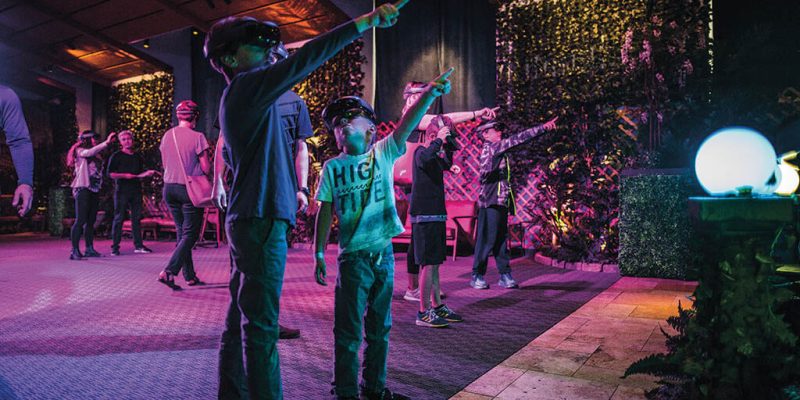
Immersive entertainment breaks free from the confines of the traditional screen. With VR headsets or AR applications, audiences can step directly into the story. Picture yourself wandering through a haunted mansion in a horror film, solving puzzles to unlock the next scene, or walking on the surface of Mars in a sci-fi adventure. The environment reacts to you — every movement, every choice — creating an unparalleled level of realism and agency.
Emotional Depth and Audience Agency
Immersion amplifies emotion. When a viewer can see, hear, and interact with the story world, the emotional resonance intensifies. Fear becomes real when danger feels close, empathy deepens when you share a character’s perspective, and joy feels personal when it’s your actions that lead to triumph. Creators now craft branching narratives where decisions have consequences, allowing each viewer to live a unique version of the same story.
Technology as the Storyteller’s New Pen
The digital revolution has given creators tools that redefine narrative boundaries. These technologies are not just delivery mechanisms — they are storytelling instruments.
1. Virtual Reality (VR): Total Immersion
VR places the audience directly within a digital world. It’s no longer about observing a story — it’s about living it. Filmmakers and game designers are merging their crafts to create cinematic VR experiences where perspective, sound, and space combine to form a 360-degree narrative. Every detail matters, from ambient sound to environmental cues, shaping how the story unfolds around the viewer.
2. Augmented Reality (AR): Blending Real and Digital Worlds
AR overlays digital content onto the real world, creating experiences that blend fiction and reality. Imagine watching a live concert where holographic performers interact with real fans, or exploring your neighborhood while uncovering hidden storylines through your smartphone. AR makes storytelling location-based and context-aware, enriching entertainment with real-world engagement.
3. Artificial Intelligence (AI): Dynamic Story Adaptation
AI is the silent storyteller behind many immersive experiences. It analyzes user behavior and choices to adapt narratives in real time. This means no two experiences are identical. AI-driven characters can remember your actions, respond differently in future interactions, and evolve alongside your decisions — a level of depth once unimaginable in traditional storytelling.
4. Haptic and Sensory Technologies: Feeling the Story
Immersive storytelling isn’t limited to sight and sound. Haptic feedback devices allow audiences to physically feel elements of the narrative — the vibration of a car chase, the soft impact of falling rain, or the heartbeat of tension before a climax. These sensory layers make experiences tangible and unforgettable.
Transforming the Entertainment Industry
Immersive storytelling is not confined to one medium; it’s reshaping entire industries. Film, gaming, theater, music, and even theme parks are embracing this transformation.
1. Cinema Redefined
Filmmakers are using VR and MR to experiment with 360-degree storytelling, where viewers choose what to focus on rather than being guided by a camera’s lens. Directors are learning to choreograph space, not just scenes, creating a cinematic experience that feels both intimate and expansive.
2. Gaming Meets Narrative Art
The gaming industry has become the testing ground for narrative immersion. Titles like “Half-Life: Alyx” and “Asgard’s Wrath” blur the boundary between player and protagonist. Storytelling in games now rivals cinema in emotional depth and artistic ambition, with branching paths, moral dilemmas, and player-driven plots.
3. Live Entertainment and Virtual Concerts
Artists and performers are turning to VR concerts and AR-enhanced performances to connect with audiences globally. Musicians can perform in virtual arenas, while fans attend from anywhere in the world — interacting, dancing, and even influencing the show’s visuals in real time.
4. Themed Experiences and Interactive Theatre
Physical entertainment venues are evolving into multi-sensory narrative environments. Interactive theatre productions like Sleep No More and theme parks such as Disney’s Star Wars: Galaxy’s Edge use immersive design to make audiences feel like they’ve entered another universe. Each guest shapes their own adventure, guided by exploration and curiosity.
The Psychology of Immersion
The success of immersive storytelling lies in its ability to engage the human mind on multiple levels. Cognitive research shows that interactivity enhances memory retention and emotional connection. When audiences make choices or physically participate, they feel ownership over the story’s outcome. This psychological investment leads to a stronger bond between the viewer and the narrative, fostering deeper loyalty and engagement.
Challenges and Ethical Considerations
With great innovation comes complex challenges. Immersive entertainment demands enormous resources, from hardware development to creative design. More importantly, ethical concerns are emerging. As technology manipulates perception and emotion, how do creators ensure they respect user well-being? Balancing immersion with privacy, data safety, and psychological comfort is crucial for the future of this medium.
The Future: Where Reality and Fiction Converge
As immersive storytelling evolves, the boundaries between entertainment, education, and daily life will continue to blur. Imagine learning history by walking through ancient civilizations, attending a virtual movie premiere on Mars, or co-creating stories with AI companions. The next frontier of entertainment will not be about observing reality — it will be about living multiple realities simultaneously. In this new landscape, stories won’t just be told — they will be experienced, shared, and personalized.
FAQs
1. How is immersive storytelling different from traditional filmmaking?
Unlike traditional films where audiences passively watch, immersive storytelling allows participants to engage, make decisions, and explore environments within the story itself.
2. What role does AI play in immersive entertainment?
AI enables dynamic storylines by adjusting plots, dialogue, and character behavior based on user actions, creating personalized narrative experiences.
3. Can immersive storytelling replace traditional entertainment?
Not entirely. While immersive storytelling offers unique experiences, traditional media will coexist, serving audiences who prefer curated, passive narratives.
4. What industries beyond entertainment use immersive storytelling?
Education, healthcare, tourism, and marketing are adopting immersive storytelling for simulations, training, and customer engagement.
5. What are the accessibility challenges in immersive storytelling?
Costly equipment, physical space requirements, and motion sickness can limit accessibility, though advances in lightweight and affordable tech are addressing these issues.
6. How do creators measure success in immersive storytelling projects?
Success is gauged by user engagement, emotional impact, replayability, and technological innovation rather than traditional metrics like box office revenue.
7. What does the future hold for immersive experiences?
The future points toward hyper-personalized entertainment where AI, VR, and AR converge to create adaptive, emotionally intelligent, and boundaryless storytelling worlds.